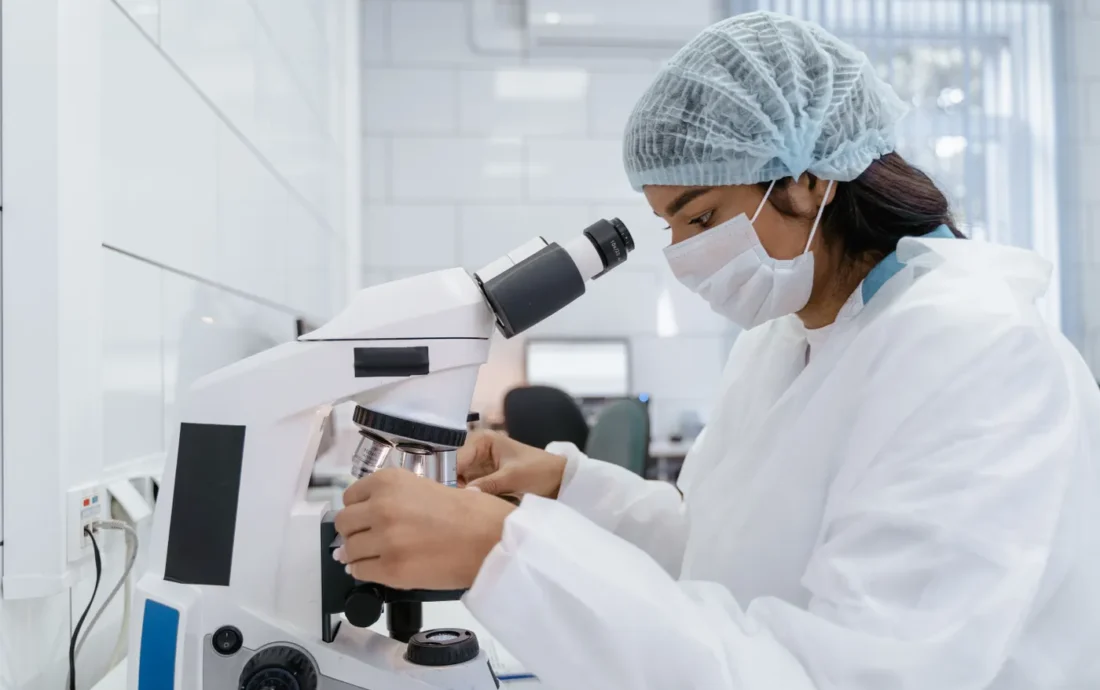
In vitro fertilisation (IVF) is the treatment most people picture when they think of fertility care. Eggs are collected after a short course of hormone injections, fertilised with sperm in our embryology lab, and the strongest embryo is placed back in the uterus a few days later.
Who IVF is for
- Blocked or damaged fallopian tubes
- Low ovarian reserve or older maternal age
- Endometriosis or PCOS that has not responded to simpler treatment
- Unexplained infertility after IUI
- Couples who want genetic testing of embryos (PGT-A)
What a cycle looks like
Most cycles take four to six weeks: around 10–12 days of injections with two or three monitoring scans, a 20-minute egg retrieval under light sedation, five days of embryo culture in time-lapse incubators, then a gentle transfer that feels much like a smear test. Your pregnancy test follows about ten days later.
Any good-quality embryos not transferred can be frozen for a future cycle, so one egg retrieval can give you more than one chance.