


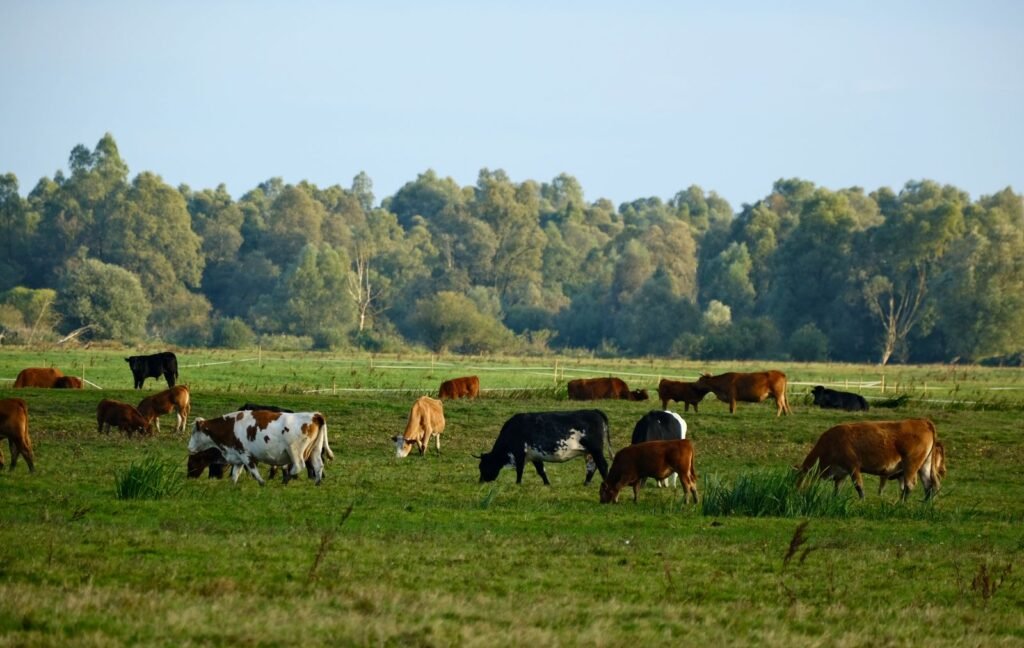
Every morning after milking, our herd walks to a fresh strip of pasture. It sounds like a lot of fence-moving, and it is. But rotational grazing is the single biggest reason our milk tastes sweeter and creamier than anything on a supermarket shelf.
Fresh grass, better milk
Young clover and ryegrass are rich in sugars and omega-3 fats. When cows graze them at their peak, those flavours come straight through into the milk. Grazing the same field all season does the opposite: the cows pick out the best plants and leave tough, stemmy grass behind.
How our rotation works
- The farm is split into 42 paddocks of roughly two acres each.
- The herd spends 12 to 24 hours in each paddock, then moves on.
- Each paddock rests for 21 to 30 days so the grass can fully regrow.
- In dry spells we slow the rotation and feed our own hay.
The rest period matters as much as the grazing. Roots grow deeper, the soil holds more water and the pasture comes back thicker every year — which means healthier cows and better milk for you.